
PPG file service / Workshop guide
Original ECU Files
Find a stock file by the ECU's actual hardware and software references, not just the vehicle badge or a filename.
A workshop may need an original file for comparison, a supported programming job or a return-to-standard enquiry. The difficult part is knowing whether that particular file belongs with that particular ECU.
Listed original files: £9.99. Confirm the exact record and suitability before ordering.
What makes an original file the right match?
Two cars with the same engine description can have different ECU hardware, software revisions or manufacturer updates. A matching model name is not enough to approve a write.
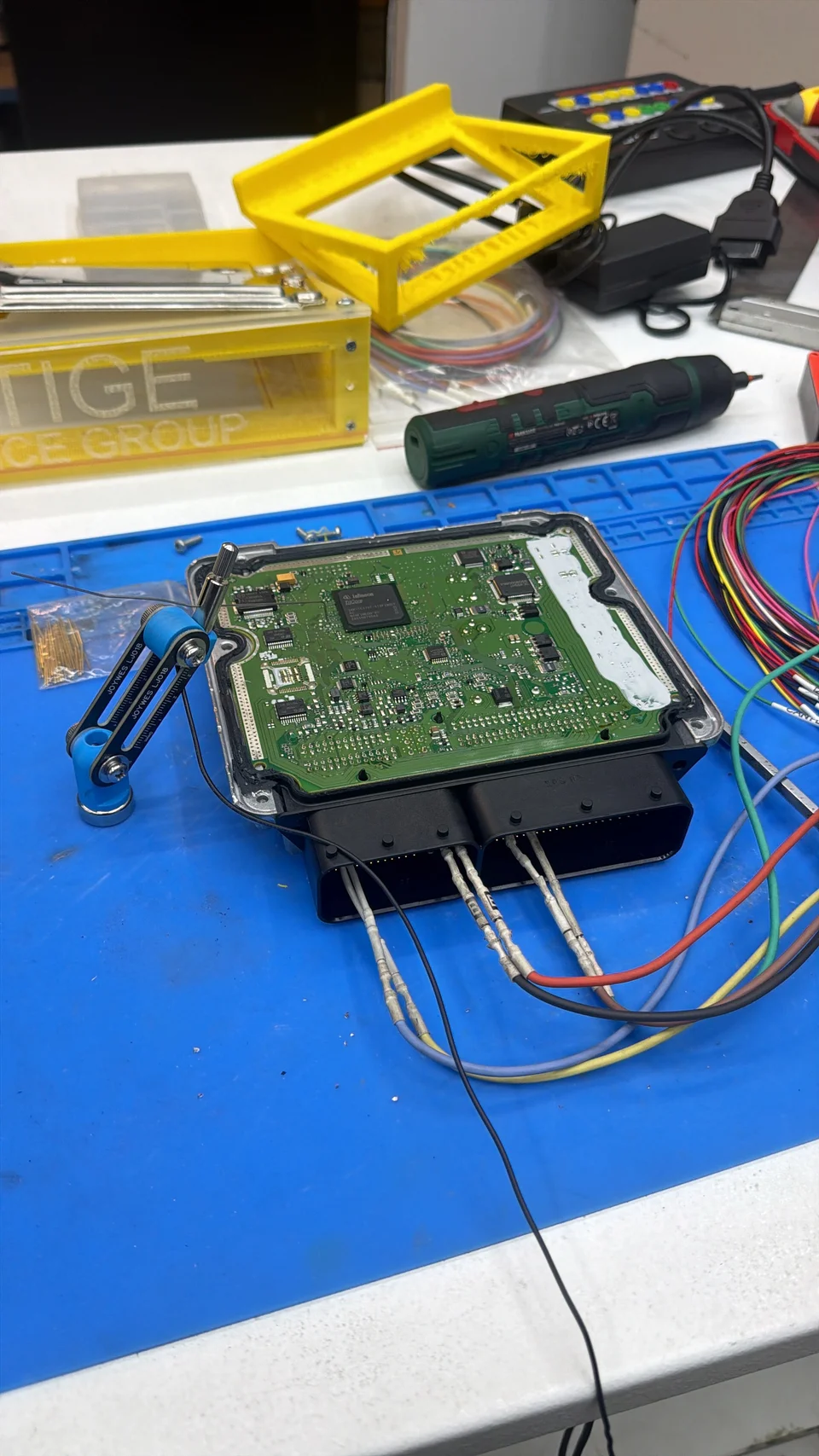
Keep the identification report from the programming tool and compare the available information, including:
- ECU manufacturer and family.
- Hardware reference and part number.
- Software number and relevant calibration or version identifiers.
- Vehicle, engine, transmission and known modifications.
- The reading method and the format required by the intended writing operation.
If the catalogue entry lacks an important identifier, stop and ask. A close-looking reference is a reason to investigate, not permission to experiment on the customer's vehicle.
A real read and a virtual read are different
A normal read obtains the data accessible through the selected operation. If those data have already been modified, the read may contain those changes. It should not be labelled original simply because it has just been read.
A virtual read retrieves a corresponding original file from a server using identification information. It is not a copy of the modifications currently installed. AutoTuner explains the distinction in its reading documentation.
Record which operation was used. That avoids handing a customer a server-supplied stock reference while describing it as a backup of their existing tune.
A calibration file is not automatically a full backup
The required format matters as much as the reference. A calibration file, an encrypted slave-tool file and a tool-generated backup serve different purposes. Renaming an extension does not convert between them.
AutoTuner's file-format guide distinguishes its editable mapping files, encrypted slave files and backups. Those definitions apply to its documented operations; check the instructions for the tool and protocol you actually use.
Do not assume a purchased calibration file includes every memory area or the vehicle-specific information needed for cloning. If the job is a physical module replacement rather than file supply, use our ECU and TCU cloning service so donor compatibility and the required data can be assessed separately.
What can the PPG file checker tell you?
The checker looks for readable identifiers and relevant catalogue matches. Supply the original tool read where available, together with the ECU identification details. Clear information is more useful than a renamed file with an uncertain history.
A readable HW or SW number does not establish that the rest of the file is untouched, complete or suitable for a different tool. Nor does it prove that a calibration will run correctly on a vehicle.
Catalogue listings marked confirmation required cannot be treated as approved purchases. Where there is no suitable identified match, discuss the job before buying a different file in the hope that it will work.
Before anything is written
Follow the programming-tool manufacturer's instructions for the confirmed vehicle and protocol. Establish the required access method, suitable power support, available backups and a recovery route before committing to the operation.
Checksum handling must also be appropriate to the tool and operation. A valid checksum alone is not evidence that the vehicle specification or calibration choice is correct. Matching and post-programming checks remain separate responsibilities.
An original file cannot repair a worn component, boost leak or faulty sensor. If the job started with a running fault, establish the cause rather than using software changes as a substitute for diagnosis.
Choose the file-supply route, not a promise
- Identify the ECU and retain the tool's report.
- Compare the HW, SW, version and format with the catalogue entry.
- Ask PPG to review any mismatch or missing information.
- Confirm the displayed price and delivery route before paying.
- Check the supplied file against the agreed operation before programming.
Listed original files are £9.99. That is file supply, not vehicle programming, ECU unlocking, cloning or an assurance that an unidentified file will repair a fault. Delivery depends on the confirmed order and available file; we do not promise that every request is instant.
We welcome file-supply enquiries from workshops and tuners across the UK and Ireland where the file and intended operation can be confirmed. Support comes from Prestige Performance Group in Newtownards, Northern Ireland. Contact PPG with the ECU identification and intended job if you need help choosing the correct route.
Looking to remove a remap from your own vehicle?
This guide is primarily for workshops handling ECU files. If you need the work completed on your vehicle, read our separate guide to returning an ECU to original software. That explains the workshop assessment, hardware and restoration limitations without assuming that buying a file is the whole repair.
Assessment First. Diagnose Properly. Fix It Right.