Direct-injection petrol
On petrol engines using direct injection alone, fuel is delivered into the combustion chamber rather than over the intake valves. Oil vapour and other contaminants can contribute to deposits on intake surfaces.
Specialist Cylinder Head Intake Port Cleaning in Northern Ireland
Assessment first. Careful dismantling. Controlled mechanical cleaning. The time and attention your engine’s procedure requires.
Next availability: January 2027. Registering interest does not reserve an appointment.
Walnut blasting uses crushed walnut shell media to mechanically remove accumulated carbon from accessible intake ports and intake valve surfaces.
It is a specialist workshop procedure. Components must be dismantled to gain access, surrounding openings protected, and the relevant intake valves verified closed before each blasting operation. Deposits and media are removed through controlled extraction.
At Prestige Performance Group in Newtownards, intake valve carbon cleaning begins with understanding the vehicle and the reason for the enquiry. Walnut blasting is not appropriate for every engine or every running fault.
The supplied images show an intake port with accumulated deposits and a cleaned port. They illustrate the surfaces assessed during intake port cleaning; the condition and achievable result vary by vehicle.
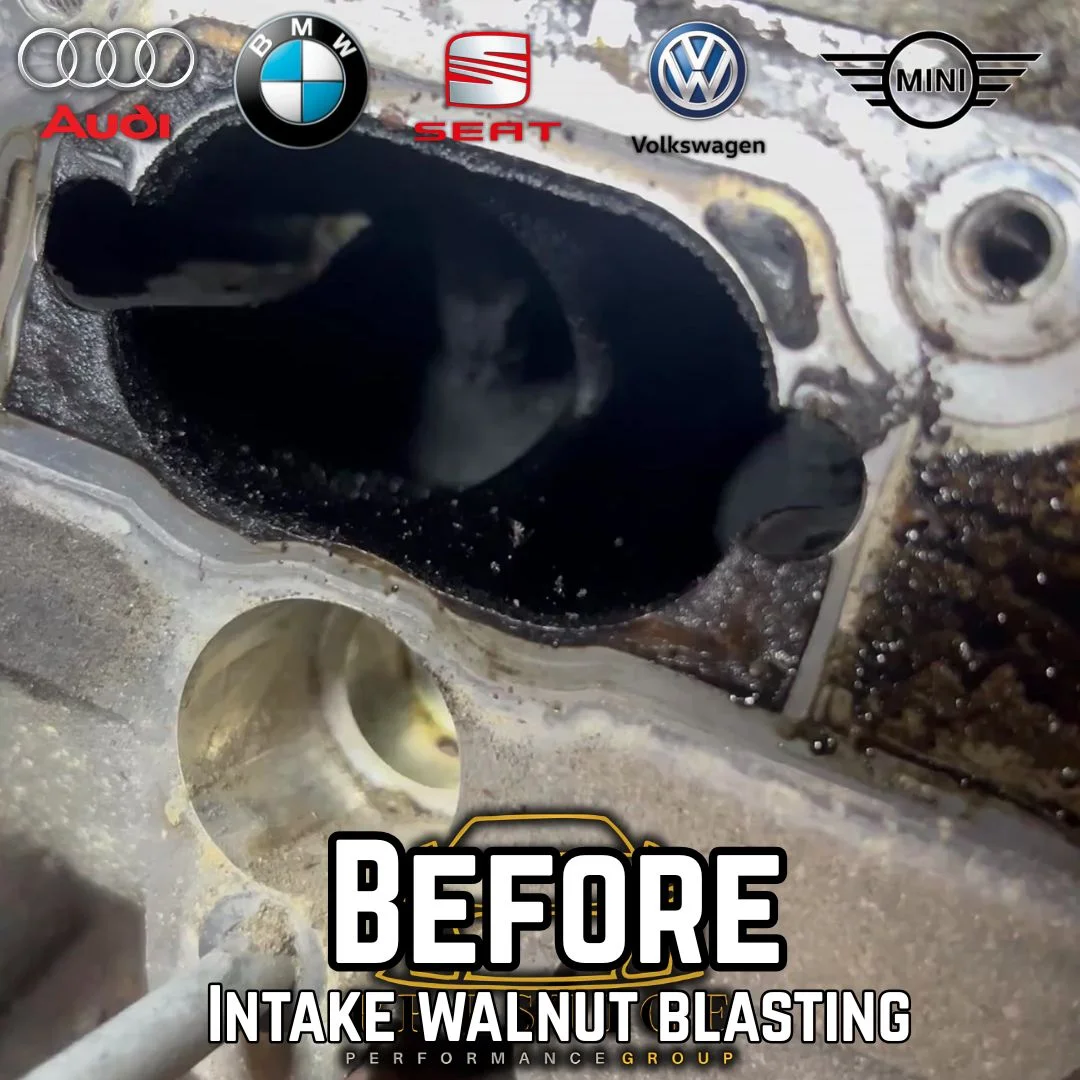
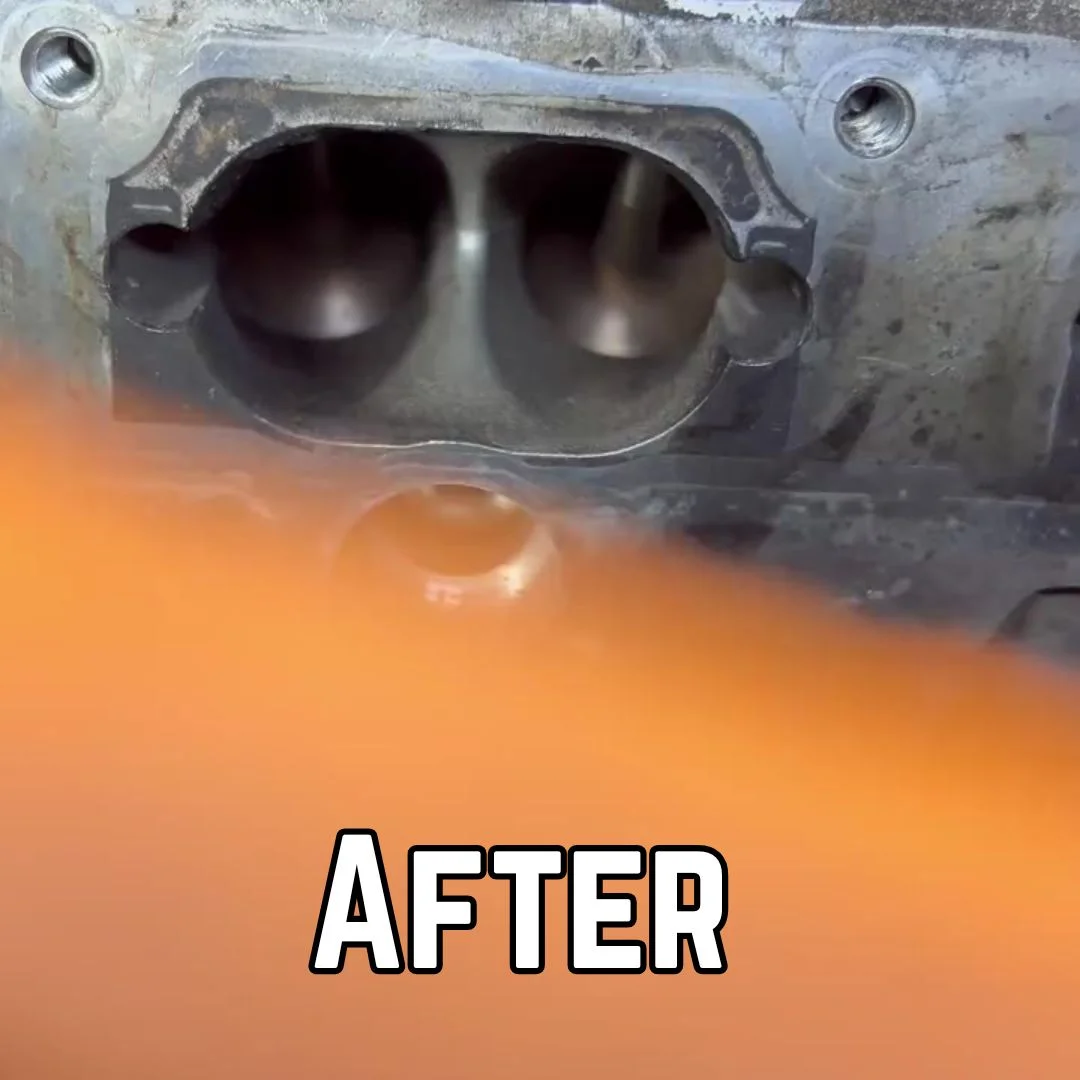
Before-and-after intake cleaning example. An individual example does not guarantee a particular cleaning or running outcome.
On petrol engines using direct injection alone, fuel is delivered into the combustion chamber rather than over the intake valves. Oil vapour and other contaminants can contribute to deposits on intake surfaces.
Recirculated exhaust soot and oil vapour can combine within a diesel intake system. Contamination may affect the ports, manifold and EGR components in different ways.
Restricted airflow, hesitation or rough idle can have several causes. Deposit location and severity must be considered alongside diagnostic evidence before recommending cleaning.
The £795 starting service is primarily for cylinder-head intake port and accessible intake valve carbon removal. Significant dismantling may be necessary to reach these areas.
These engines can develop significant carbon accumulation in the intake system. Cleaning the cylinder-head ports addresses a different area from the manifold, EGR valve or EGR cooler.
The port blasting service does not automatically include any of those components. Each is assessed and quoted individually where required. EGR coolers and other suitable removed components may require separate ultrasonic cleaning, subject to compatibility and condition checks.
Walnut blasting is not a universal answer to Mazda performance, DPF, oil dilution or engine-management faults. Assessment may identify other underlying mechanical problems requiring attention.
These are enquiry examples, not a confirmed compatibility list. They do not imply that every listed engine needs cleaning. We must establish the exact engine variant, intake access and suitable procedure before accepting work.
N13, N20, N54 and N55 petrol families; selected N47, B47, N57 and B57 diesel engines. Intake configuration and access differ between applications.
N14 and N18 engine families, subject to individual engine identification and inspection.
Selected 1.8 TFSI, 2.0 TFSI/TSI and 2.0 TDI engines. Injection systems vary by generation and market; some petrol variants combine port and direct injection.
2.2 Skyactiv-D enquiries, including Mazda 3, Mazda 6 and CX-5 diesel models. Port, manifold and EGR contamination are assessed separately.
Selected direct-injection EcoBoost petrol engines. Injection configuration and access must be checked for the specific engine.
Subject to engine identification and assessment. Complex engines, V6/V8 applications and extensive diesel intake contamination require an individual quotation.
Carbon cleaning describes several different procedures. The correct method depends on where contamination is located, how severe it is and the engine’s design.
| Walnut shell blasting | Hydrogen or intake-fed chemical treatments |
|---|---|
| Mechanical abrasive removal from directly accessible surfaces, particularly intake ports and valves. | Different treatment processes which do not provide the same direct mechanical access to deposit surfaces. |
| Requires access dismantling, protection, valve-position checks and controlled extraction. | Suitability and results depend on the treatment, contamination location and manufacturer guidance. |
We do not assume every chemical process is ineffective, or that one method suits every fault. Removed components may require a different compatible cleaning process or replacement.
Walnut blasting does not automatically include complete intake system restoration. The following are separate services and may involve additional charges.
Final pricing depends on engine configuration, access requirements, carbon accumulation, dismantling requirements and additional work requested.
This is a maintenance cleaning service, not a guaranteed repair or fix. The price covers the agreed cleaning procedure; diagnosis and any separately agreed repairs may be additional. All work is subject to vehicle suitability and individual quotation. Complex engines, V6/V8 applications and extensive diesel intake contamination are individually quoted. Additional component cleaning remains separately chargeable.
The procedure is labour-intensive and may involve extensive dismantling. Depending on the engine and condition, your vehicle may need to remain at Prestige Performance Group for several working days.
We advise the expected workshop allocation once your vehicle has been reviewed. Timing is determined by the required procedure and condition; the priority is to complete the work correctly.
No exact completion time or same-day turnaround is promised through this page.
A specialist procedure starts with a clear reason to carry it out.
Our approach draws on diagnostic experience and an understanding of modern petrol and diesel engine systems. We establish the concern, explain the proposed scope and prepare a vehicle-specific quotation.
Careful mechanical procedures, photographic documentation where practical and appropriate post-work checks support that approach. We do not recommend unnecessary cleaning where the cause has not been established.
Based at 36A Donaghadee Road, Newtownards, we support drivers across Northern Ireland, including Bangor, Belfast and County Down.
Walnut blasting is a maintenance cleaning service, not a guaranteed repair or fix. It uses crushed walnut shell media and extraction to mechanically remove accumulated deposits from accessible intake ports and valve surfaces. It requires direct access and careful preparation. Removing deposits does not guarantee that a running fault, warning light or other underlying problem will be resolved.
Some direct-injection petrol and diesel engines with confirmed intake deposits may benefit. Engine family alone does not establish need or suitability: intake design, access, valve position and manufacturer procedures must be checked.
Symptoms alone are not enough. We review the vehicle, history and relevant diagnostic evidence, then inspect accessible areas where appropriate. Ignition, fuelling, air leaks, sensors or mechanical faults may require attention instead.
Cylinder-head intake port and accessible intake valve cleaning starts from £795 including VAT. This is not a fixed price for every vehicle. Engine configuration, access, dismantling, contamination and agreed additional work determine the individual quotation.
The work includes access dismantling, protection, valve-position verification, controlled cleaning and extraction, residual-media checks, careful reassembly and relevant post-work checks. Significant labour can be required before cleaning can begin. Separate component cleaning and non-standard parts cost extra.
Some vehicles need to remain at the workshop for several working days. We advise the expected workshop allocation after reviewing the engine and condition. The website cannot promise an exact completion time or same-day service.
If intake deposits contribute to restricted airflow or poor running, removing them may improve drivability. Results depend on the condition and other faults. No particular power increase or return to factory performance is guaranteed.
Fuel consumption may change where deposits were contributing to inefficient running, but driving conditions, engine health and other systems also matter. We do not promise an economy improvement or a percentage saving.
It may help if intake deposits are the established cause. Rough idle can also involve ignition, injectors, air leaks, compression, timing or control faults. Assessment should establish the cause before cleaning is recommended.
Port cleaning is not a DPF repair. DPF faults require investigation of loading, regeneration and relevant engine or emissions-system faults. Intake contamination may be one factor, but cleaning the ports does not establish that the DPF fault is resolved.
No. EGR valve cleaning or repair is assessed and quoted separately. Port blasting does not automatically clean the intake manifold, EGR valve or EGR cooler.
No. An EGR cooler may need a separate ultrasonic cleaning procedure if its materials, construction and condition are suitable. Compatibility is evaluated before processing. Replacement may be recommended if cleaning cannot reliably restore the component.
No. Internal intake manifold cleaning is a separate service and may involve additional dismantling, compatible cleaning methods, seals or replacement parts. We explain any proposed additional work in the quotation.
It may be suitable for cylinder-head intake deposits after an engine-specific assessment. Mazda 3, Mazda 6 and CX-5 2.2 diesel vehicles must be individually checked. Manifold, EGR valve and cooler cleaning are separate, and other mechanical or engine-management faults may still need repair.
An incorrectly performed procedure can cause damage, including through media entering an open cylinder or remaining in the intake. Engine suitability, closed-valve verification, protection, controlled extraction and residual-media checks are essential. No mechanical procedure is entirely without risk.
There is no universal interval. Engine design, usage, condition and diagnostic findings matter. We recommend an assessment when justified by symptoms or inspection, rather than unnecessary cleaning at an arbitrary mileage.
Yes. The proposed journey is vehicle information, suitability review, quotation, customer approval, booking allocation, booking fee and then confirmed appointment. Due to booking demand, our next availability is January 2027.
Due to booking demand, our next availability is January 2027. Send the workshop an interest enquiry through WhatsApp or email so we can review your vehicle and requirements.
Include your name, vehicle registration, make and model, year, engine, mileage and reason for enquiry. Add any known fault codes or previous intake/EGR work. If we already hold your vehicle details, tell us the registration so the team can refer to them.
These buttons open a prepared message for you to complete and send. Interest is registered with the workshop only when you send your message; clicking a button does not submit it.